I’m pleased to share that my new essay, “Bookworm in Taipei,” will be featured in the upcoming issue of moocat. For those who haven’t come across it, moocat is an independent literary magazine that has been online since 2001, devoted to showcasing writers and artists who aren’t yet famous. It publishes essays, poetry, travelogs, comedy and art, is supported by its readers rather than advertisers, and relaunched this year in celebration of its 25th anniversary.
The essay is about a lifetime of hoarding books, my years living in Taipei in the 1990s, and the bookstores that marked that time. Here’s the opening as a sneak preview.
Bookworm in Taipei
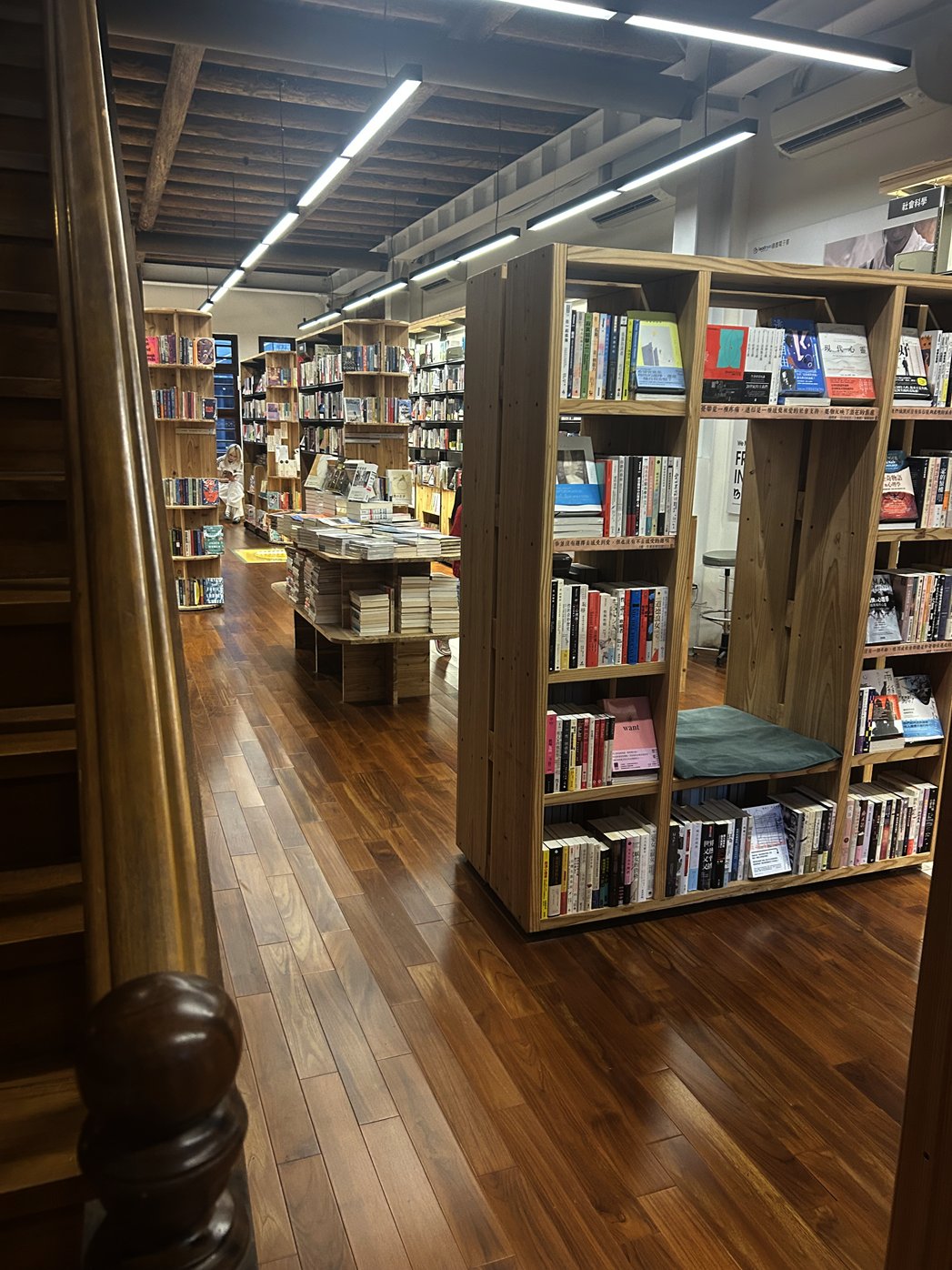
Call me a book whore. Paperbacks, hardcovers, even printed PDFs created from rough photocopies. My living spaces are wild with books, to my wife’s chagrin. I’ve often thought that instead of a gravestone or fancy mausoleum marking my bones, I’d prefer a bookshelf as my memorial. It would include formative influences like Haruki Murakami’s A Wild Sheep Chase, Paul Bowles’ Let It Come Down, Italo Calvino’s Invisible Cities, among others.
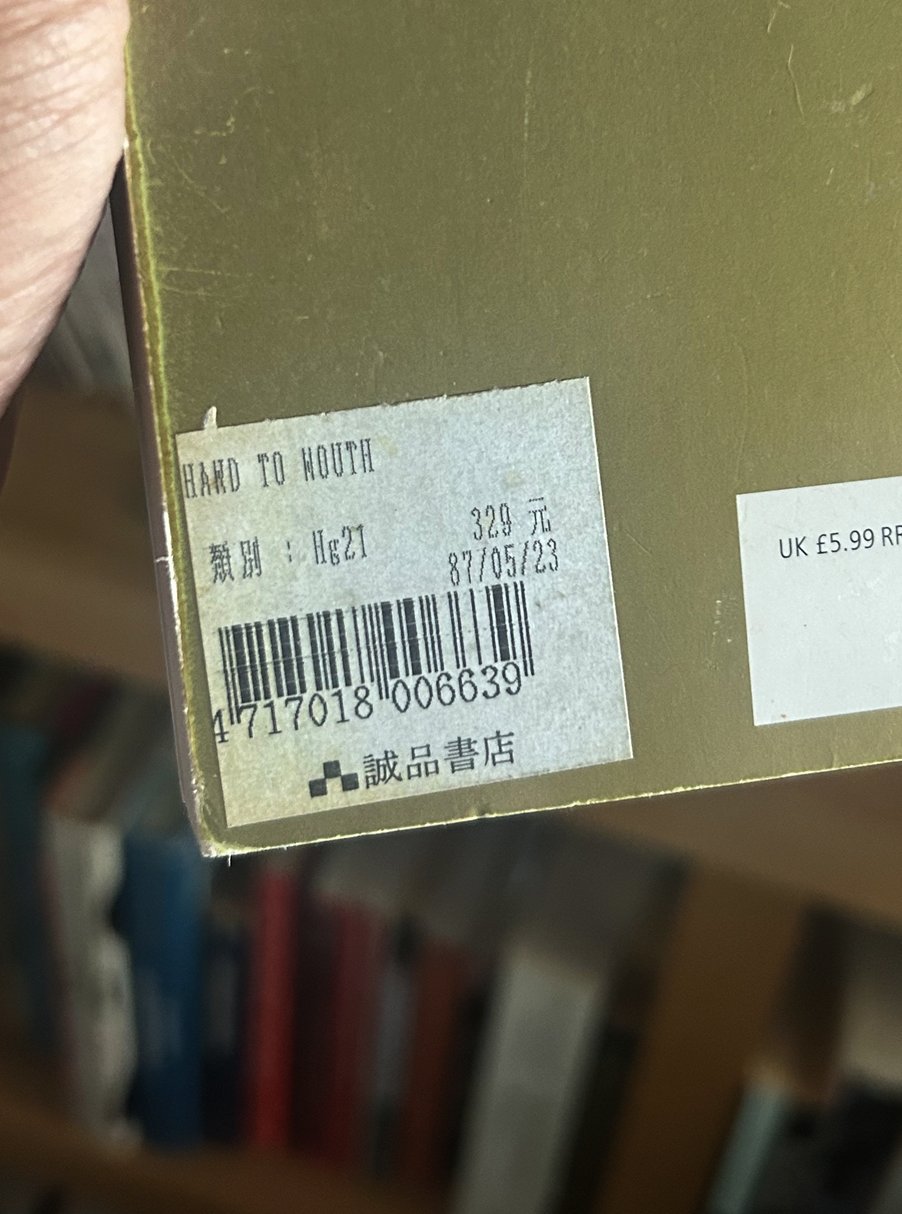
Some books are a form of time travel, their presence recalling the specific moments they entered my life. Found that Flann O’Brien in a shambling bookstore in Galway, Ireland in 2018, just before a pint, shepherd’s pie and folk music at The Front Door Pub. Located Georges Perec’s Life: A User’s Manual at Cody’s in Berkeley around 1992, the halcyon days of indie bookshops. Lifted that Kafka short story collection off the student bookstore shelves at Brown University in 1990, not realizing the copies were intended for a specific literature course (I wasn’t enrolled), the opening story “An Imperial Message” still giving me the chills, as does the memory of reading it at the student union, pizza scalding the roof of my mouth. Bought Paul Auster’s Hand to Mouth, the UK version with the austere gold monochrome photo of the author on the cover (austere Auster), at Eslite in Taipei in 1997.
Ah Taipei! My own period of austerity, from 1995 to 1998. As is usually the case when one is fresh out of college and living life, it was a challenging, bewildering and wondrous period. I worked in the southeast corner of town near the Taipei Zoo, sub-tropical vegetation beckoning at my office window, Taipei’s downtown and its mélange of signage, smog and fried smells an hour away by bicycle or bus (I was too timid to do the foreign resident thing and get my own illegal motorized scooter). To quote Murakami, I had stumbled into a hard-boiled wonderland. Struggling to comprehend bus maps, beaten down by rain or heat or both, I often sequestered myself at home with Hong Kong movies or live American football games late at night on TV. So it went for my first year in Taipei.
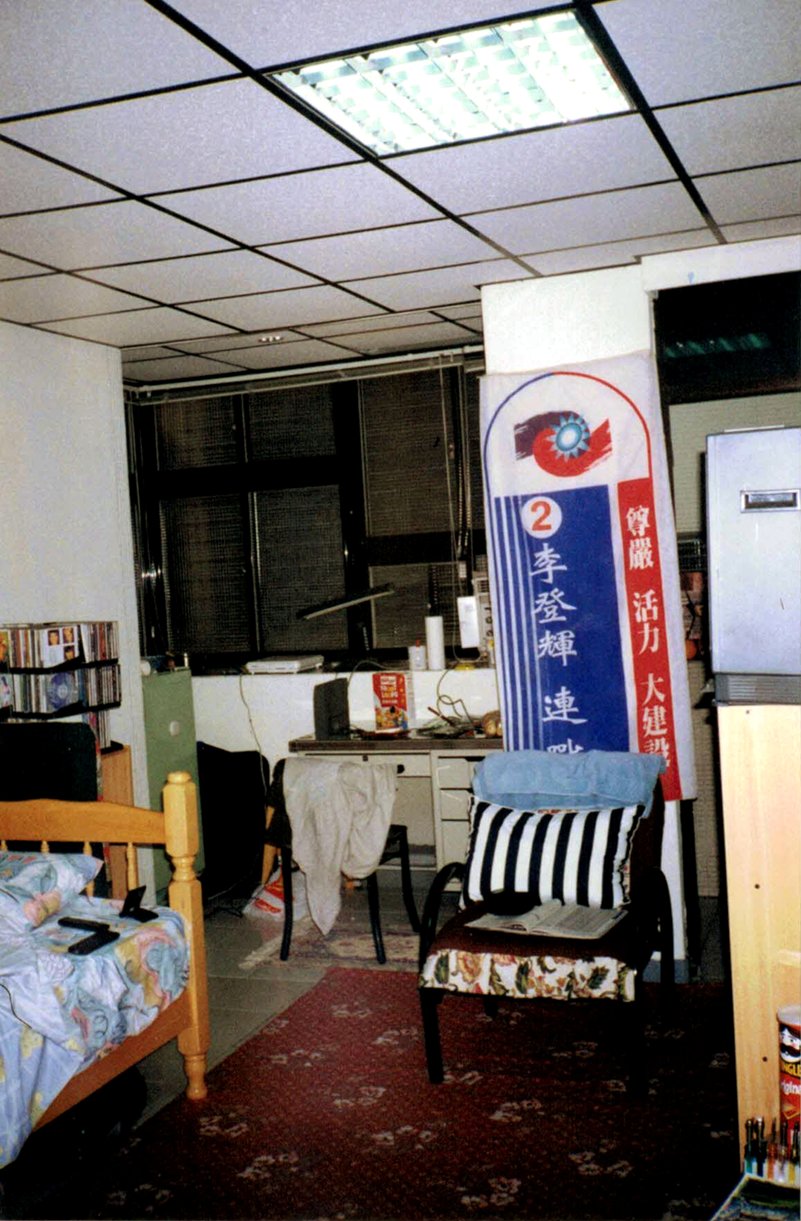
Things changed in 1996. I moved to New Taipei City and a quieter, more spacious apartment in Shenkeng, a neighborhood known for stinky tofu. The tofu was indeed stinky but my apartment was high above it all, with a view of the Jingmei River snaking under spiraling highways and humpback hills. I was reconnecting with old friends, meeting new ones, a wider range of experiences taking hold: overnight hikes in the mountains, marathon tennis sessions and brunch on Sunday mornings, jazz evenings at the Blue Note and the Brown Sugar. It’s easy to regard the world of your youth with rose-colored eyes; you end up saying stuff like Taiwan was in a better place when I lived there. But Taiwan was in a good place in 1996—still underrated by the world at large, approaching economic and democratic maturity, even holding its first true presidential election. The latter led to Chinese fleet and missile exercises just off the coast, the mainland reminding its renegade province who it was fooling with. CNN International’s reportage on such tensions was far more hysterical than the mood in Taipei, as everyone carried on with carrying on. (With centuries of tragedies behind you, what’s a bit of political saber-rattling?)
That same year, the first local MRT train line in Taipei opened, the terminus down the road at the zoo. What was then called the Mucha line was (and still is) a rickety ride, the trains shaped like toys and bobbing around corners, nowhere near as speedy as the newer lines that now criss-cross the city. But at the time, efficient public transit was revolutionary. Just as with my new apartment, the elevated ride blessed me with a God’s-eye view; where once I was hemmed in by the buildings and the heat, I was now ascendant. New Taipei City, new trains, new life.
The full essay will appear in the upcoming issue of moocat.